SONOSAX SX-R4+ : un enregistreur audio professionnel construit autour des préamplis SONOSAX, fait pour le travail de terrain en autonomie
Le SX-R4+ est conçu autour des préamplificateurs micro SONOSAX, réputés dans le monde entier : bruit très faible, grande réserve de niveau, et cette captation « naturelle » qui fait la signature de SONOSAX. C’est un véritable enregistreur de production 16 pistes autonome, assez compact pour la sacoche, mais pensé comme un outil de tournage sérieux : métadonnées rigoureuses, redondance et synchronisation professionnelle.
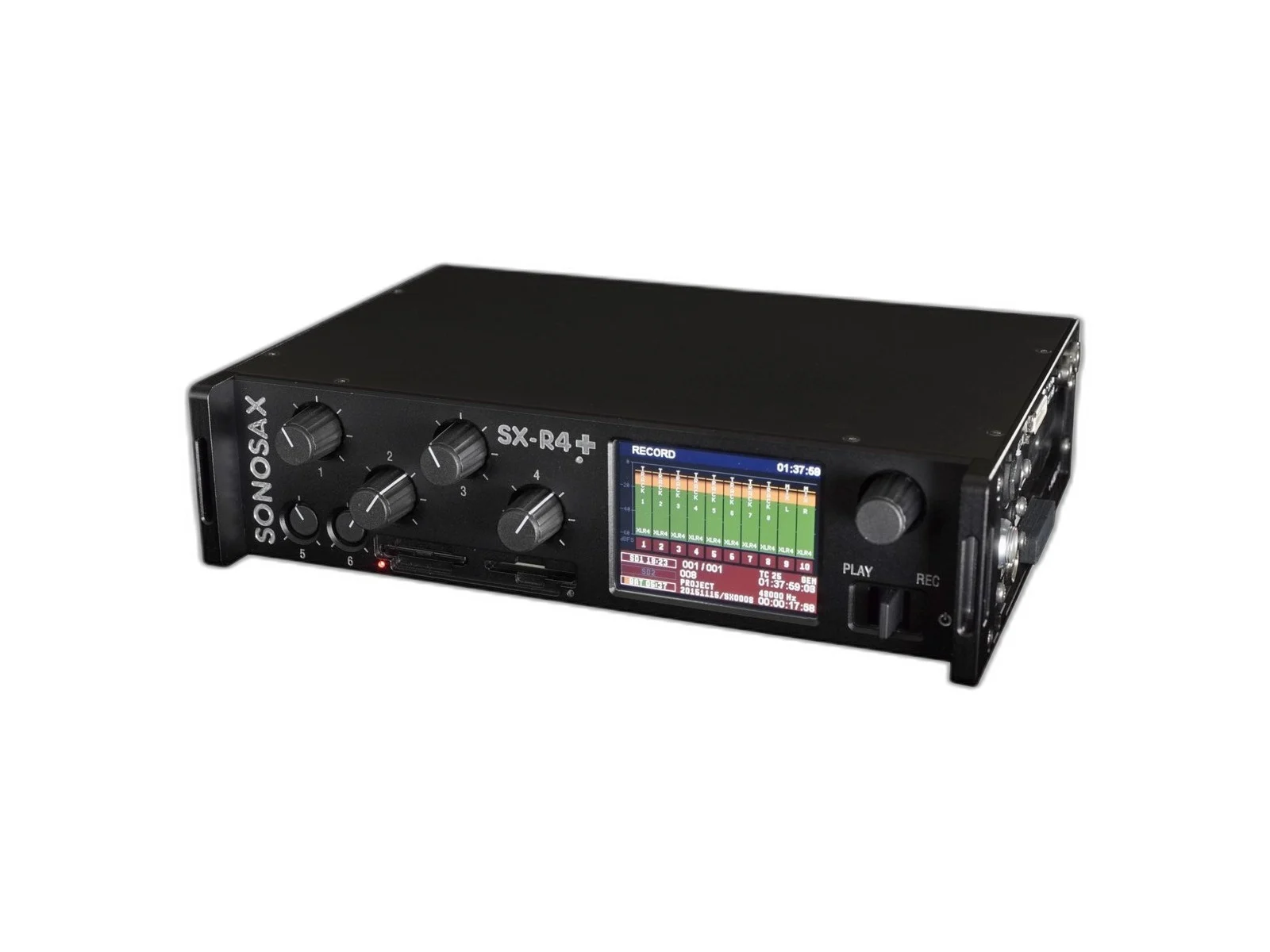
L’un de ses grands atouts est d’offrir ces performances dans un châssis en aluminium usiné réellement portable (200 × 50 × 144,5 mm) et très léger pour sa catégorie (960 g sans batterie, 1,2 kg avec la batterie de 48 Wh).
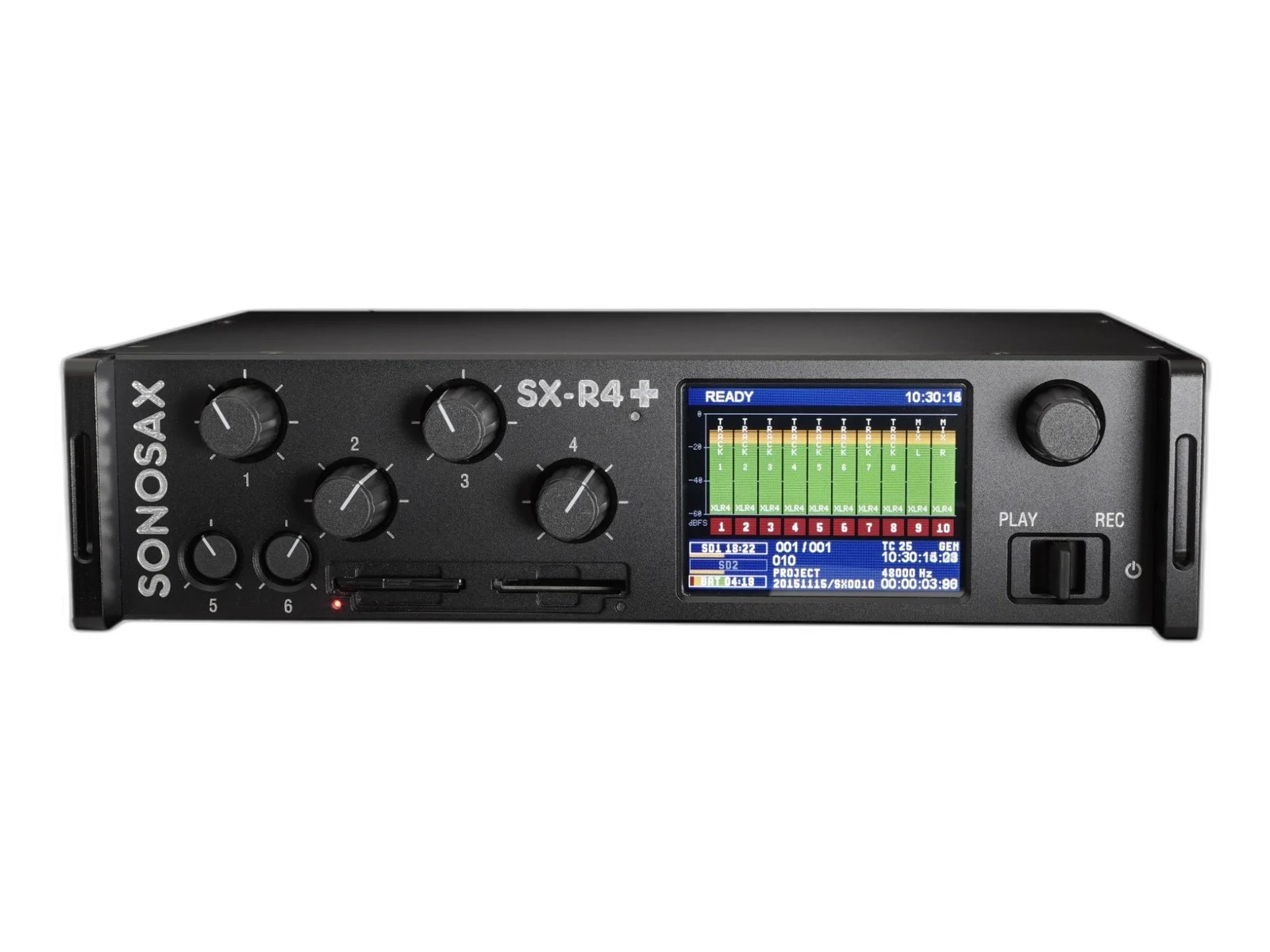
L’appareil suit aussi le rythme d’un vrai plateau : il démarre en 4 secondes et il est aussitôt prêt à enregistrer. Son écran tactile résistif de 2,4″ reste utilisable dans les conditions difficiles : quand les gants rendent les écrans capacitifs impraticables, l’interface se commande encore de façon fiable avec un stylet.
Rapidité d’utilisation et raccourcis personnalisables
Au-delà de ses performances audio, le SX-R4+ est fait pour rester rapide sur le plateau. Les fonctions clés et les menus les plus utilisés peuvent être assignés à des zones d’accès rapide : l’opérateur va droit à l’essentiel, sans naviguer dans les menus.
Selon le contexte, un appui simple ou un appui long sur une zone donnée de l’écran tactile déclenche une action ou ouvre un menu précis. Le même principe vaut pour la commande rotative à poussoir de la façade : appui simple et appui long peuvent recevoir des fonctions différentes, accessibles immédiatement pendant les prises.
Ce principe d’actions personnalisables s’étend aux accessoires d’extension SONOSAX compatibles dotés de boutons ou de commandes rotatives : l’opérateur assigne raccourcis et fonctions aux commandes externes, selon sa façon de travailler.
Enregistrement, redondance et métadonnées
Le SX-R4+ enregistre jusqu’à 16 pistes en BWF non compressé, avec métadonnées iXML.
Il prend en charge les fréquences de 44,1 à 192 kHz en 24 ou 32 bits, et le pull up/down de 0,1 % pour les productions en NTSC.
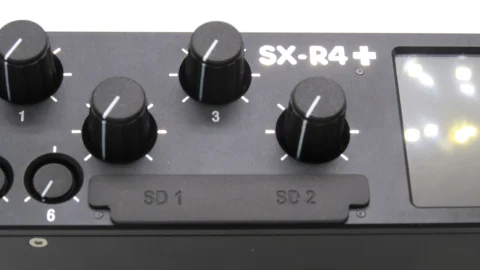
Pour la fiabilité sur le plateau, le SX-R4+ utilise deux cartes SD et peut enregistrer sur les deux à la fois, en mode miroir : la redondance est immédiate.
Entrées et extension numérique, dont le connecteur d’entrée AES 26 broches
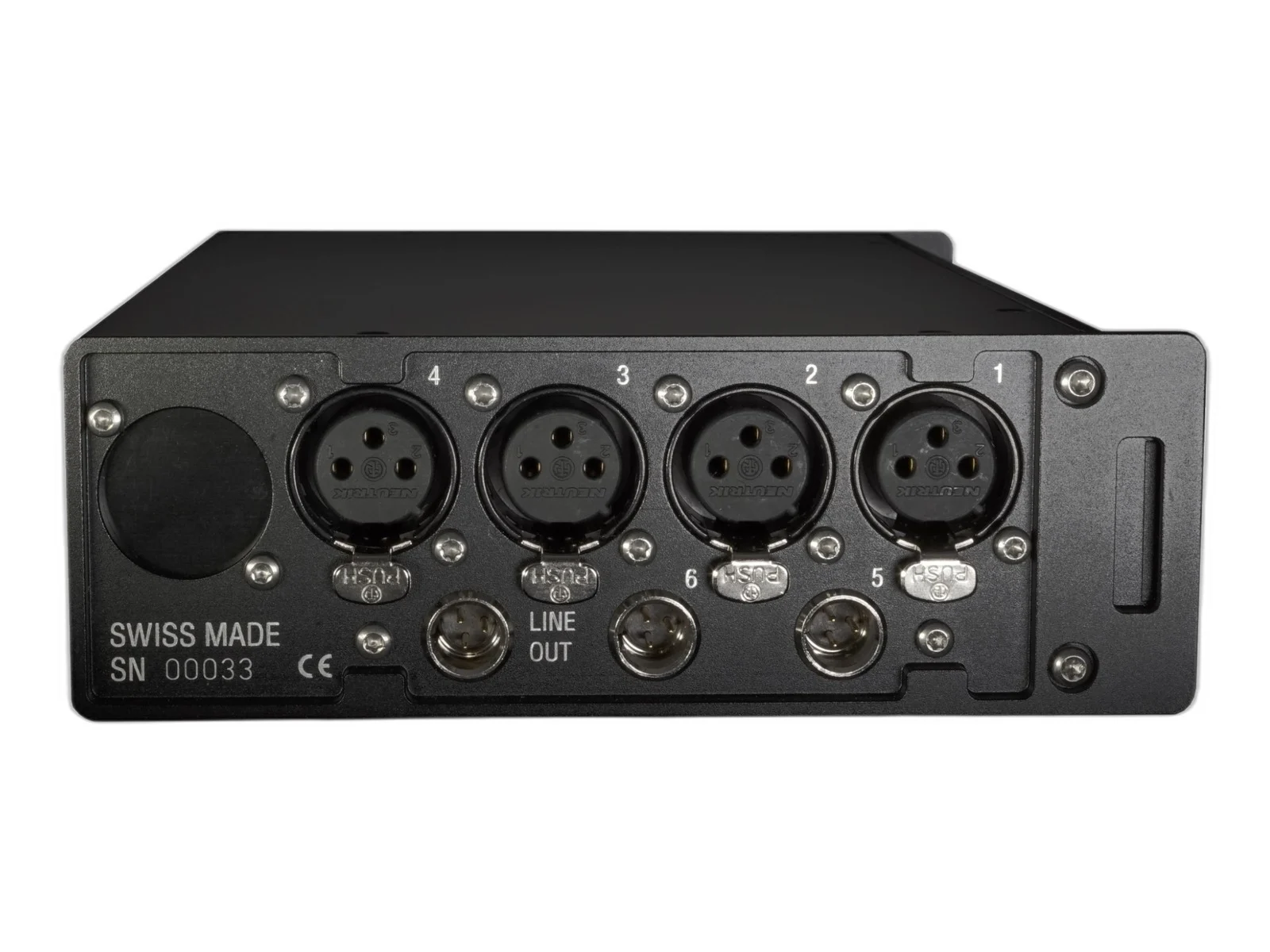
4 × XLR-3F inputs, individually configurable as:
Micro/ligne analogique (symétrie électronique) avec inversion de phase, alimentation fantôme 48 V, coupe-bas et réglage de niveau en façade
AES3 ou AES42 numérique (symétrie par transformateur) avec ASRC individuel, inversion de phase, coupe-bas et réglage de niveau en façade
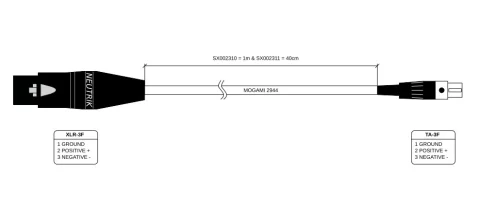
2 entrées ligne symétriques sur TA-3 avec réglage de niveau en façade
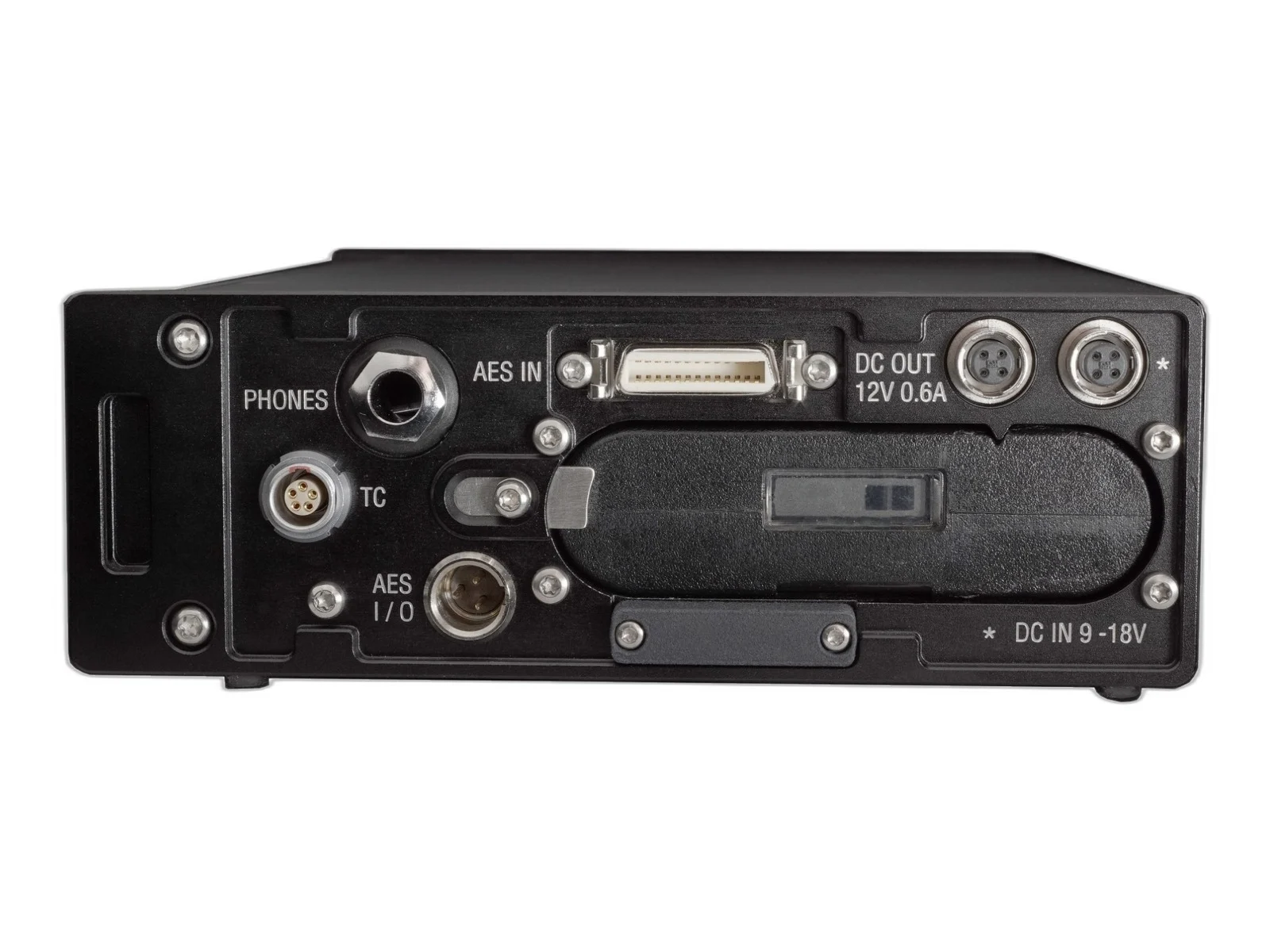
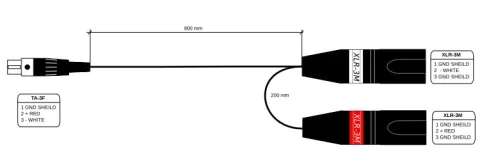
Entrée/sortie AES3 sur TA-3 (symétrie par transformateur), commutable en entrée ou en sortie
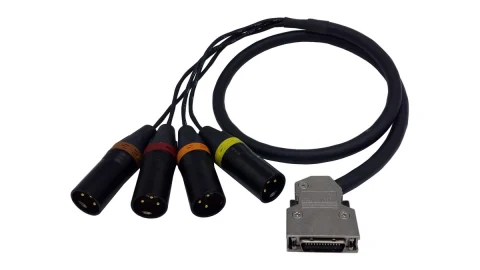
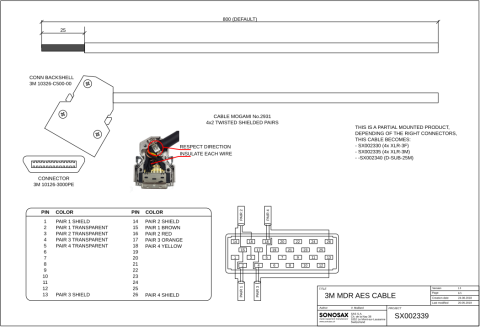
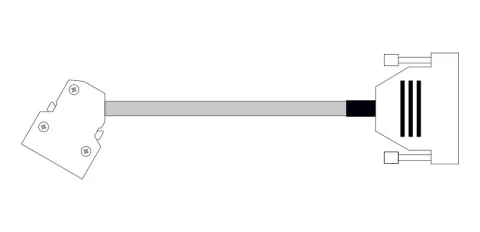
Connecteur 3M MDR 26 broches : 4 entrées AES et bus de commande
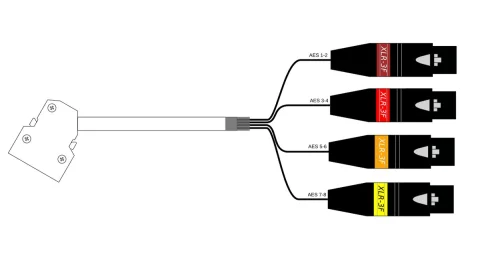
Sur le flanc droit, le SX-R4+ dispose d’un connecteur multibroche 3M MDR 26 broches, qui transporte 4 entrées AES3 (AES 1–2 / 3–4 / 5–6 / 7–8) et le bus de commande du SX-R4+ pour l’extension du système.
En interne, l’enregistreur met en œuvre quatre récepteurs AES indépendants, chacun avec son propre ASRC : il accepte ainsi des sources numériques non synchronisées. Ces récepteurs AES sont affectés soit aux entrées AES du connecteur 26 broches, soit aux XLR lorsqu’elles sont configurées en numérique (AES3/AES42).
Alimentation
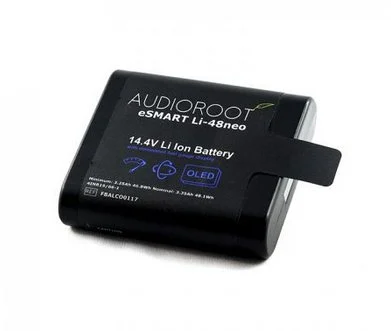
Batterie intelligente amovible de 14,4 V / 48 Wh (compatible SMBUS)
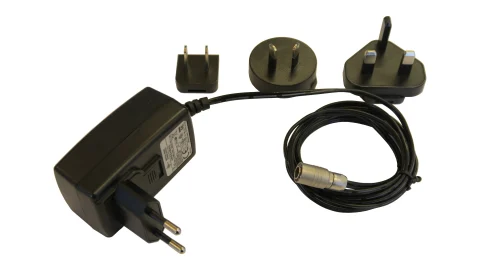
Alimentation externe de 9 à 18 V continu sur Hirose 4 broches, compatible SMBUS et isolée électriquement
Sortie 12 V continu régulée pour les accessoires (jusqu’à 7 W)
Un écosystème d’extensions
Préamplificateur SX-AD8+ : le SX-AD8+ porte la capacité du SX-R4+ à 12 entrées micro, pour de plus grosses configurations en sacoche, avec la qualité des préamplis SONOSAX sur tout l’ensemble.
Surface de contrôle à faders linéaires SX-LC8+ et contrôleur USB MIDI : le SX-LC8+ ajoute 8 faders linéaires avec touches de fonction, pour un mixage plus confortable sur le terrain. Il dispose aussi d’un mode USB MIDI, pour les systèmes qui acceptent une commande MIDI.
Extension de façade SX-RC8+, boîtier d’éclatement AES et distribution d’alimentation : le SX-RC8+ ajoute 8 faders rotatifs avec touches de fonction pour étendre les possibilités de mixage. Il sert aussi de boîtier d’éclatement AES pour le connecteur multibroche d’entrée AES du SX-R4+ (4 connecteurs AES sur TA-3, pour brancher plus facilement des sources AES telles que des récepteurs HF numériques). Il assure enfin la distribution d’alimentation (connecteurs Hirose), une sortie casque supplémentaire et un micro d’annonce (slate).
Module d’extension SX-RX8+, dédié à la HF : le SX-RX8+ est un module d’extension HF à 8 canaux, conçu pour intégrer les liaisons HF multicanales au SX-R4+. Son logement pour batterie de 98 Wh alimente les récepteurs et contribue à l’alimentation de l’enregistreur ; il dispose aussi d’encodeurs et de poussoirs assignables. Comme le SX-LC8+, il s’utilise en USB MIDI avec d’autres systèmes acceptant une commande MIDI.
Options (une configuration au choix)
Base (sans option)
Module de sortie 4 canaux sur XLR-5M (modes de sortie configurables par l’utilisateur, dont des combinaisons analogique/AES)
Entrées/sorties Dante (audio sur IP ; compatible PoE, pour l’alimentation et l’audio sur un seul câble)
Micro Sennheiser AMBEO VR sur DIN 12 broches
En résumé
Entrées / sorties
4 entrées XLR-3F, configurables individuellement en : – ANALOGIQUE : niveaux micro/ligne, symétrie électronique, avec inversion de phase, alimentation fantôme 48 V, coupe-bas et réglage de niveau en façade – NUMÉRIQUE : AES3 ou AES42 symétrisé par transformateur, avec ASRC, inversion de phase, coupe-bas et réglage de niveau en façade
2 entrées ligne à symétrie électronique sur TA-3, avec réglage de niveau en façade
4 entrées AES3 symétriques sur connecteur multibroche
1 entrée AES3 symétrique avec ASRC sur connecteur TA-3 (partagé avec la sortie AES3)
2 sorties ligne analogiques asymétriques sur TA-3
1 sortie AES3 symétrique (fréquence d’échantillonnage indépendante, au choix de l’utilisateur) sur connecteur TA-3 (partagé avec l’entrée AES3)
Jusqu’à 12 entrées micro avec le SONOSAX AD8+
Audio sur IP optionnel sur connecteur RJ45, par exemple en Dante
Performances
Dynamique globale de 135 dB (pondérée A), de l’entrée analogique au fichier enregistré (114 dB, pondérée A, pour la version USA)
Bande passante globale de 90 kHz en enregistrement à 192 kHz
Traitement sur 40 bits
Enregistrement
jusqu’à 16 pistes sur 2 cartes SD (SDHC, SDXC)
BWF non compressé avec métadonnées iXML
de 44,1 à 192 kHz en 24 ou 32 bits, pull up/down de 0,1 % pour le NTSC
Interface utilisateur
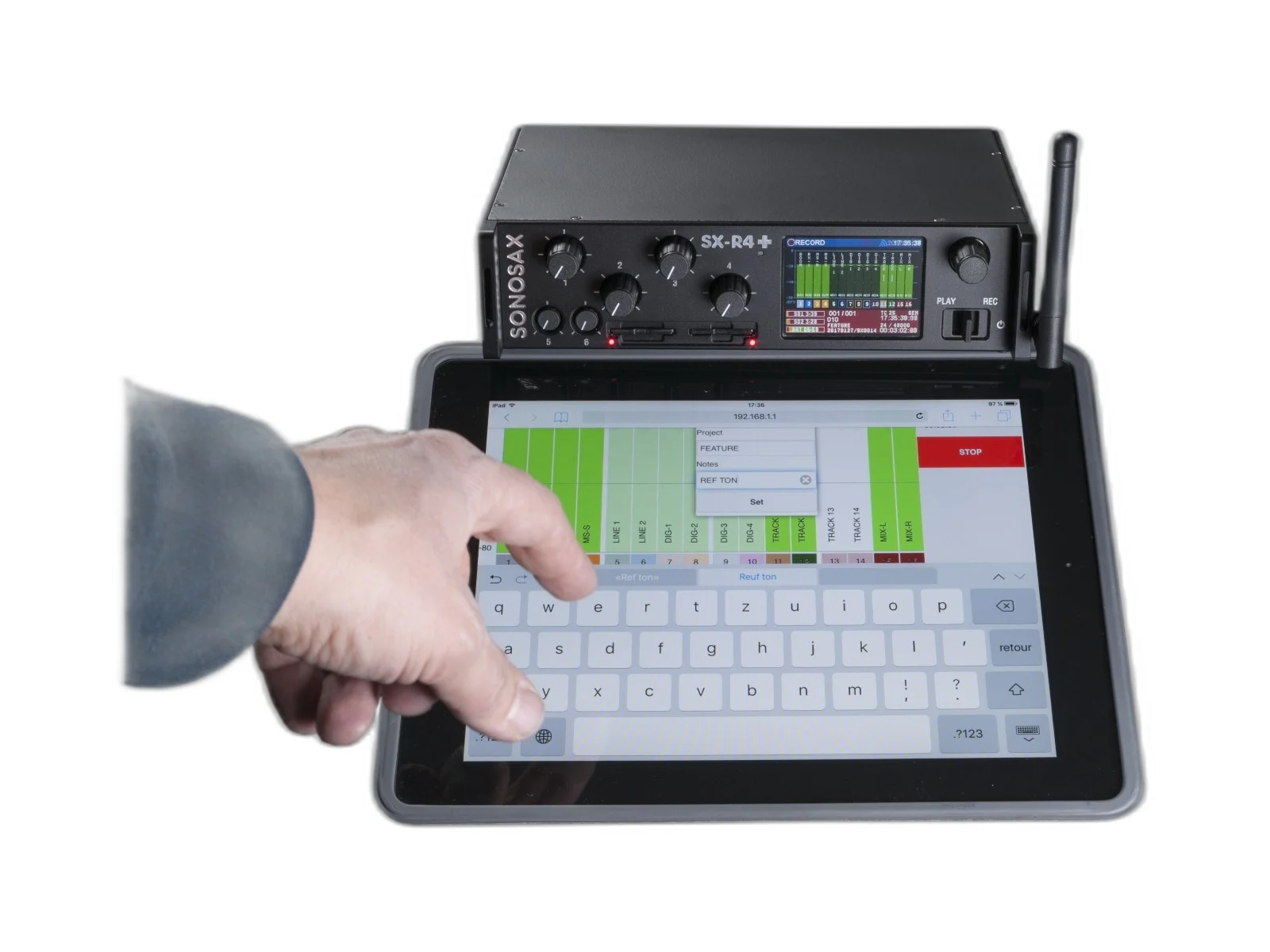
Écran tactile TFT couleur de 2,4 »
Interface web dynamique en Wi-Fi
Alimentation
Batterie lithium amovible de 14,4 V / 48 Wh, compatible SMBUS
Alimentation externe de 9 à 18 V continu sur Hirose 4 broches, compatible SMBUS, isolée électriquement
Sortie 12 V continu régulée et découplée pour alimenter des périphériques, jusqu’à 7 W
Gestion intelligente de l’énergie, avec informations détaillées à l’écran
Time code
Précision : 0,5 ppm
Entrée et sortie indépendantes sur connecteur Lemo
23.976, 24, 25, 29.97DF, 29.97ND, 30DF, 30ND
Mécanique
Boîtier en aluminium usiné
Dimensions hors tout : 200 x 50 x 144,5 mm (7,87 » x 1,96 » x 5,7 »)
Poids : 960 g / 2,1 lb sans batterie, 1,2 kg / 2,64 lb avec la batterie de 48 Wh
Documents
Ces documents et ces notes de version sont publiés en anglais.
– For development reasons, both bootloader and firmware files unfortunately have exactly the same name; to differentiate between them, the bootloader is only 100 KB, while the firmware is over 700 KB.
– Up-date one at a time starting with the bootloader, then reboot the SXR4+ and proceed the same way with the firmware.
– When the up-date is completed, reboot the SX-R4+ normally and the apply a full “Factory Settings” in the System Info menu.
– DO NOT RELOAD previously saved user settings, as this may cause memory corruption. You will need to redo all your settings from scratch.
Fixed scratch record (wasn’t working with SX-LC8+)
Fixed bug in input menu: for XLR as analog, the 2nd channel buttons were hidden but still active
Added an IP address in the web application (so that the SX-R4+ can join an existing network).
Fixed stability issues.
Added SX-RX8+ functionnality
Improved SD card wirting performance
Dante operation is limited to the following:
The optional DANTE card handles up to 16 channels. Input and output channels can be operated at the same time in pairs of channels.
16 channel recording using DANTE is only available up to 96kHz, limited to 8 channels at 192kHz.
Please note that you’ll need to factory reset your recorder when switching between 3.x and 4.x releases (recorder + user settings and format all SD cards).
Update filename to copy on SD card must be “R4P_UPD.BIN” (some browsers rename it)
a FULL FACTORY RESET (step 4 of the firmware update procedure) must be applied from the service menu (so that user settings are also cleared)
Backup your files then format all your SD cards before applying update. The SX-R4+ reads the SD card content when it is inserted. The recent 4.1 firmware adds some new functionality (related to Dante tracks and SX-RX8+) that are not supported by previous versions.
SX-R4+ with the “4CH OUT on XLR-5M” option only:
after switching the unit off and on again, the optional board appears to be functional, but does not provide any audio signal (either in AES or analog). Workaround :deactivat and then reactivate the option outputs.
CHANGELOG
Enhanced graphics rendering, allowing more channels to be recorded at high sample rates
Added SX-LC8+ operation
Fixed track name bug: when set to 12 chars, a memory corruption could occur if used with the snippet list
Fixed track filename creation on SD2 (file was created when configured as MIX only and without any armed track)
Added SX-RC8+ potentiometer position noise reduction button (see SETUP/SYSTEM/MISC/RC8+)
This noise reduction can be used when the SX-RC8+ position is noisy
Added solo channel selection in inputs (use rotary encoder push to select a channel, the other, or a stereo)
Removed <BEXT> tag in iXML (unused and deprecated)
Fixed metadata project name: when modified while recording, it was not set properly
Fixed playback issue with (very long) take: seeking wasn’t working correctly
Fixed sound report: takes were not always sorted
Fixed pop noise when closing a fader assigned to LINE OUT
Fixed gain menu interlock when using SX-AD8+ solo events
Minor interface enhancements (format card indicates SD card identification)
Operation with SX-AD8+ or SX-RC8+ can sometimes results in spurious touch screen events when modifying SX-AD8+ or SX-RC8+ pot position. A fix will be posted soon, please disable bottom touch 1/2/3 push buttons simple touch events (menu SETUP / SYSTEM / PUSH BUTTONS) as a temporary workaround.
Under some rare circumstance, a crash can occurs causing screeen freeze and/or icons pixel corruption. We identified that problem when engaging AES inputs at startup, but can imagine that it can happens in other -very rare- cases. To overcome that problem, please disable meters peak hold (menu SETUP/METERS and set HOLD TIME parameter to zero).
CHANGELOG
Fixed option card operation: configuration was not restored after a power cycle, audio was corrupted
Fixed XLR input performance: low frequency noise floor (in the range 1..100Hz) wasn’t totally flat
Modified headphones limiter: attack time was too high
Enhanced note edition: selecting an empty snippet resets the note field
Enhanced web interface: unarmed tracks are less visible than armed ones, added SD & power alarms
Enhanced push-button solo action: now every channel can be selected (instead of channel pair) for AES, LINE and AUX AES inputs
Option card 4 channels out is not working properly: configuration is not restored correctly after a power cycle and audio is corrupted with click noises. A fix will be released soon, use version 2.5 if you need the 4 channel outputs of the option card.
CHANGELOG
Fixed SD card ERROR and SPEED ERROR
Enhanced note snippet list. Selecting an item will add it to the note (vs replace it). Selecting it again will remove is from the note.
Metadata tape can now be freely edited (12 chars max). When set, all audio files are stored in the path /PROJECT/WORKING DAY/TAPE. When empty, files are stored in /PROJECT/WORKING DAY and tape value is the working day
Added metadata take type menu, allowing to select the following: FALSE START, NO GOOD, CIRCLED, WILD TRACK, PICKUP, REHEARSAL, ANNOUNCEMENT, SOUND GUIDE. Take type is stored in the iXML metadata according to specification release 2.01
Added configuration save/restore to /from SD card (see menu SETUP/SYSTEM/BACKUP/RESTORE). Sub-menu SAVE OPTIONS allow user to select what should be saved in the configuration file
Added main screen peak-meters pages (horizontal, vertical)
Added limiter to headphones output (HEADPHONES/SETUP)
Added limiter to mix tracks (MIX/SETUP)
Increased headphones and output preset count from 4 to 8
Added headphones presets selection from main screen when level is locked (use rotary encoder)
Added RF64 (https://en.wikipedia.org/wiki/RF64) encoding. This format is automatically used if max file size is > 4GB (set it in menu SETUP/RECORD SETTINGS/MAX FILE SIZE). Max file size is now 45GB, but default value remains to 4GB for compatibility reason
Added input delays (up to 96k, disabled at 176.4 and 192k)
Added project name selection list. Up to 8 project name can be defined in (METADATA/PROJECT)
Increased track name and note snippet list length from 8 to 32
Added “SHOW F. START” button in TAKE LIST menu, allowing to view false start takes
Decreased default alarm level
Modified default behavior for input gain long press knobs: now toggle phase reversal (instead of track arm)
Added link in sound report title, allowing to download data as CSV file
Full rework of the web interface, which allow now to modify monitoring, outputs, user settings, as well as metadata, last takes or track arming
Various minor bug fixes and interface modification, such as meters hold returns smoothly, added reset button in filetag menu, fixed battery time to empty, …
A faulty SD card ERROR or SPEED ERROR can occurs during record. It happens mainly with low track count (1-3) and high sampling frequencies, more frequently to the SD2 card slot.
CHANGELOG
Added SX-AD8+ and SX-RC8+ operation from SX-R4+
Fixed timecode accuracy (was not accurate when cycling power with 23.976 and 30 fps). Also fixed some drift when switching from EXT JAM SYNC to the same frame rate.
Fixed SD card filename bug (same filename in a folder).
Fixed phase reversal input level issue: when using fader mude, a phase change using a push button assigned function can corrupt the input level
Fixed take number generation: wasn’t correct when scene changed during recording
Modifying metadata of an existing take with the HTML web interface results in a bad filename of next take to be recorded
23.976 & 30 fps timecode formats are not accurate after a power cycle
Version 2.4 is a fix for version 2.3, which has a major bug.
INFO It is important to apply a full factory reset as described in the simplified update procedure to prevent running new firmware with an old configuration.
CHANGELOG
Fixed timecode bug (was not correct on SD2)
Fixed SD card ‘SPEED’ error
Fixed monitoring bug
Fixed take edition bug (metadata wasn’t saved properly)
Fixed alarm level (was active even when disabled)
Fixed take number generation (wasn’t correct if a take was shot with identical scene name)
Fixed sound report (false start takes were displayed and projects were not filtered)
Fixed system instability involving 4 channels output option card and sampling frequency changes
NOTE Official version jumps from 1.4 to 2.1; version 2.0 only exists as beta. If you’re running version 2.0, please update to version 2.1.
KNOWN BUGS
XLR inputs levels remain fixed to MUTE. In fader mode, the input level can be modified using the rotary encoder in the input menu. However, if the input level is MUTE, input level change does not work. Workaround: do not mute inputs before entering fader mode.
Record sometimes fails on a SD card with the ‘SPEED’ error on the card. More frequent with low track count (1-2) on high speed cards.
CHANGELOG
Fixed playback channels swap
Fixed playback timecode (wasn’t displayed)
Fixed timecode accuracy
Fixed 176.4/192k operation
Fixed record start: under some rare condition, record start could be ignored
Fixed power failure filetag: was identical to previous take
Fixed ambient light sensor calibration and auto dim mode
Added User Settings menu
Added timecode date in user bits
Added system time zone
Added fader operation mode
Added SD2 Mix Only recording
Added 24bits WAV file recording/playback
Added note field in Tag Last Take menu
Added track coloring
Added meter range user selection
Added sound report file generation
Improved monitor/mix menu: presets are now independent from each others
Improved audio performance and behavior
Improved various menus (Inputs, Monitoring/Mixing, filetag, push buttons, date/time, split Record Tracks menu into Rec Tracks and Mix menus)
Version 1.4 is a fix for version 1.3, which has a major bug.
KNOWN BUG / INFO
Sampling frequencies of 176.4k and 192k not yet supported
WAV file creation time may be incorrect due to timezone
USER SETTINGS menu is not implemented
Modifying playback position can result in channel swap
CHANGELOG
Fixed file system (setting file to hidden was incorrectly implemented)
VERSION 1.3 November 2015
KNOWN BUG Applying a false start will corrupt the file system, making some files unreadable. Please update to version 1.4.
NOTE Once updated, press AND HOLD REC button until boot screen appears to power up the SX-R4+.
CHANGELOG
Fixed monitor presets: wasn’t restored at boot time
Fixed take list menu: selected take timecode wasn’t correct
Fixed pop noise during playback start
Fixed AUX AES output: channel status is now in pro mode
Fixed various minor bugs
False start files are now hidden
Full re-work of the metadata menu: scene is 10 alpha-num chars, added tag last take, added user editable snipped list for track names and notes
Full re-work of the push button assign menu (SETUP/SYSTEM/PUSH BUTTONS)
Added file size selection: fow now limited to 4GB (until WAV64 is implemented)
Added RECORD TRACKS menu
Added encoder long press new menu with various useful links and tools: timecode, track names, track arming, screen lock, headphones lock, display brightness, daylight mode
Added timecode set manual
Added quick power-down (to be enabled in menu SETUP/SYSTEM/POWER DOWN SETUP): press and hold REC button in rec ready to power down unit.
Added solo in headphones menu
Added a second reference level: user can now configure ‘orange’ level and ‘red’ level
Added a config save button (SETUP/SYSTEM) to force configuration save (done at power down)
Player: loading a take no longer begins automatically playback; encoder can be used to modify playback position (1 step = 1%), to change headphones level, enter pause or stop states.

Avis
Il n’y a pas encore d’avis.